Choose your investments. An overview of different assets
Investing involves buying assets with the goal of generating a return. Assets can include shares, bonds, ETFs, property, managed funds, and alternative investments such as cryptocurrencies, options, and forex.
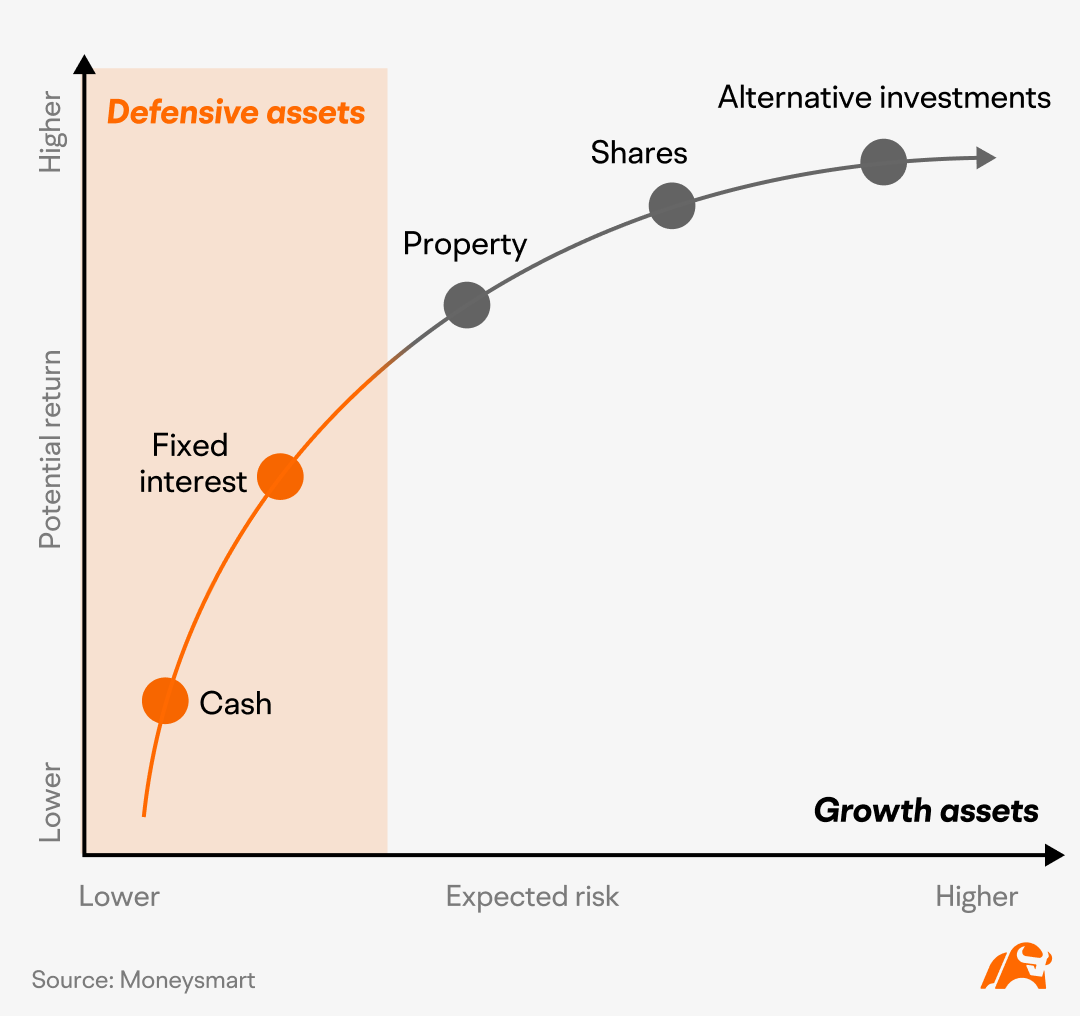
Investors must be mindful of the risk-reward balance inherent in any investment. To generate a return on your invested capital, you must be willing to accept a certain level of risk. Generally, the higher the risk associated with an investment, the greater the potential return you might expect.
Shares
Shares represent partial ownership in a company. If the company does well, you stand to gain in two main ways:
You can sell your shares for a profit if their market value rises above the price you paid.
You can receive dividends payments, which are a share of the company’s profits distributed to shareholders.
Although investing in shares carries a higher level of risk, they can be solid investments over the long term and often outpace returns from other asset classes like bonds and property.
Gaining knowledge about the various kinds of shares can enhance your investment portfolio and help you achieve your financial objectives. Let’s explore the different categories of shares:
Income shares – They pay larger dividends compared to other types of shares, which can be used to generate income without selling the shares. Their prices, however, tend to increase slowly.
Blue chip shares – They are issued by companies with a track record of growth and stability. Blue chip shares usually pay regular dividends and generally maintain a fairly steady price trend.
Growth shares – They are issued by entrepreneurial companies experiencing a faster rate of growth than their general industries. These shares typically pay little or no dividends because earnings are reinvested for expansion.
Cyclical shares – They are issued by companies in industries sensitive to economic cycles, such as mining and construction, and their prices fluctuate with economic conditions.
Defensive shares – In contrast to cyclical shares, these are from companies in industries like food and pharmaceuticals that typically remain stable during economic downturns.
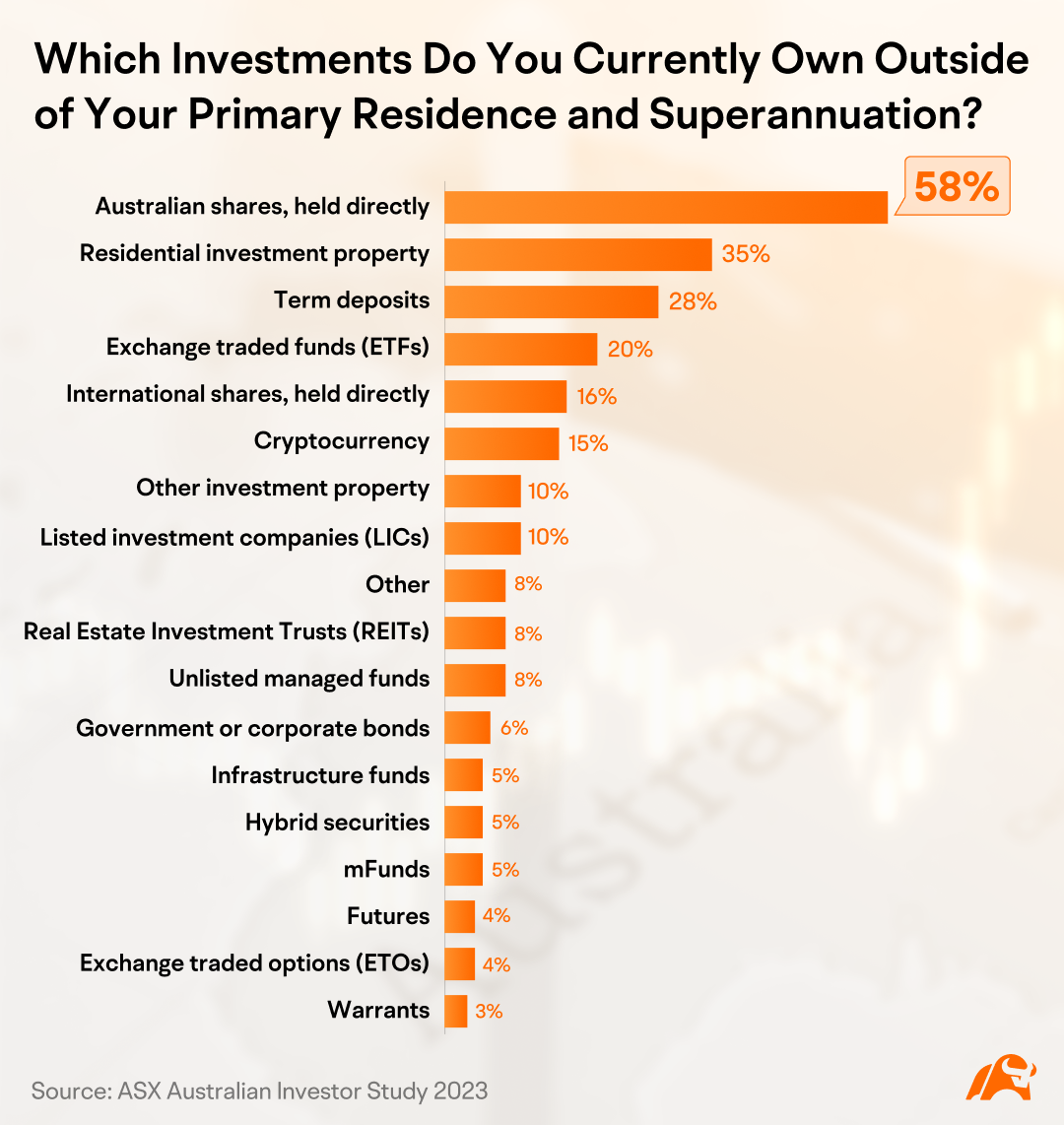
According to an in-depth online survey conducted on behalf of ASX, Australian shares were the most popular investment outside of primary residence and superannuation in 2023, with 58% of investors holding Australian shares.
Bonds
Bonds are a type of debt security representing a loan by the investor to the issuer.
They are issued with a fixed maturity date, at which point the issuer promises to pay the face value of the bond to the holder.
Bonds are debt securities that can be issued by governments or corporations, with the former borrowing to fund public initiatives and the latter to finance business ventures. Unlike regular loans, bonds are tradable on the financial market, allowing their value to fluctuate and giving them a market price.
Bonds attract investors seeking a steady income since they typically offer periodic interest payments that are often higher than what’s earned on bank deposits. These payments might be distributed annually, semi-annually, or quarterly.
However, like all investments, bonds come with risks, including:
Credit risk: The issuer fails to make interest payments or return the principal at maturity.
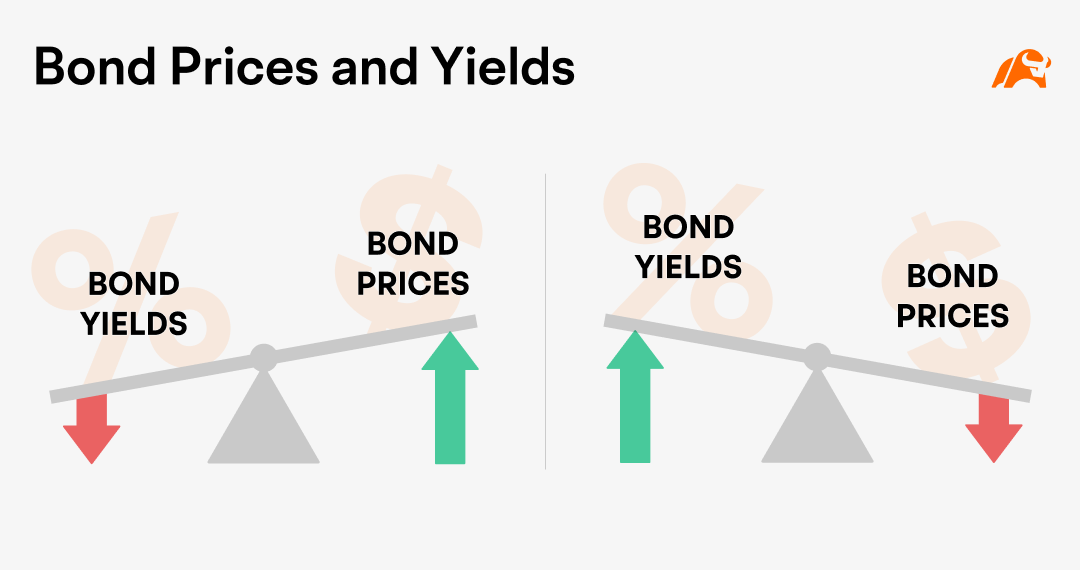
Interest rate risk: Your income will be affected by an unfavourable movement in market interest rates.
Liquidity risk: You may find it difficult to sell your bonds to other investors in the market.
ETFs
Exchange traded funds (ETFs) are a cost-effective way for investors to gain exposure to a broad range of markets and assets, both domestic and international. These include:
Australian shares
International shares
Fixed income investments like bonds
Commodities
Foreign currencies
Crypto assets
When you invest in an ETF, you don't own the underlying investments. Instead, you own units in the fund, and the ETF provider owns the shares or assets. ETF units can be created or redeemed based on investor demand, which helps to keep the price of the units close to the net asset value (NAV) of the ETF.
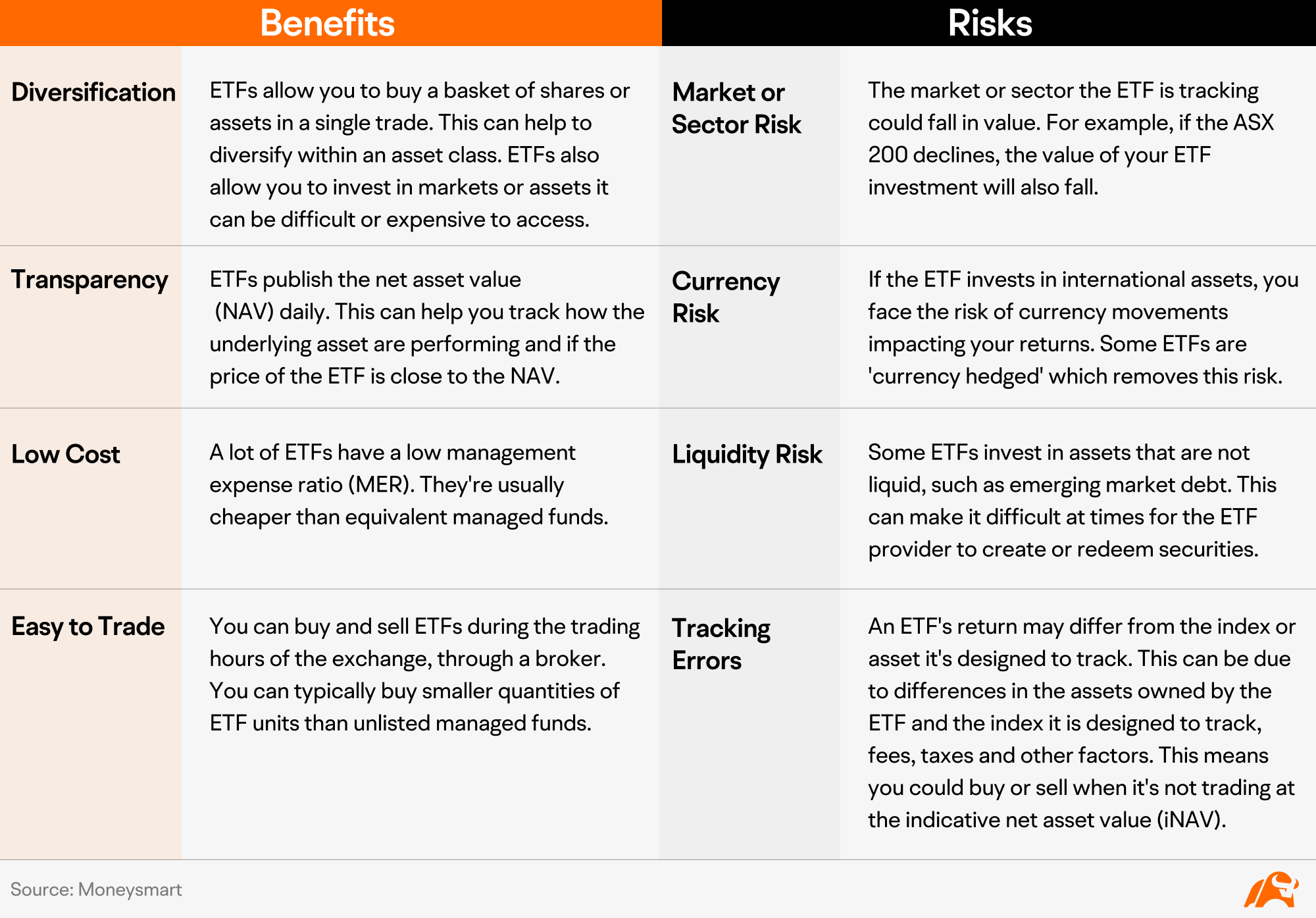
ETFs offer an accessible and cost-effective route to investing, allowing for diversification across a broad range of assets. They usually aim to mirror the performance of a specific underlying index.
The table below summarizes the benefits and risks of investing in ETFs.
A-REITs
Australian real estate investment trusts (A-REITs) are listed investment vehicles that provide exposure to property assets such as office towers, shopping malls, industrial buildings, hotels, and cinemas.
Like managed funds, A-REITs are pooled investments overseen by professional managers, and because they are listed on the ASX, you can buy and sell them in the same way as shares.
Because A-REITs typically earn regular rental income from medium or long-term tenants, they may offer a consistent income stream, with distributions paid monthly or quarterly.
Over the past decade, the S&P/ASX 200 A-REIT index, which tracks the performance of A-REITs and mortgage REITs, generated an annualized total return of 10.52%, outperforming the benchmark S&P/ASX 200 index, which returned 8.27%.
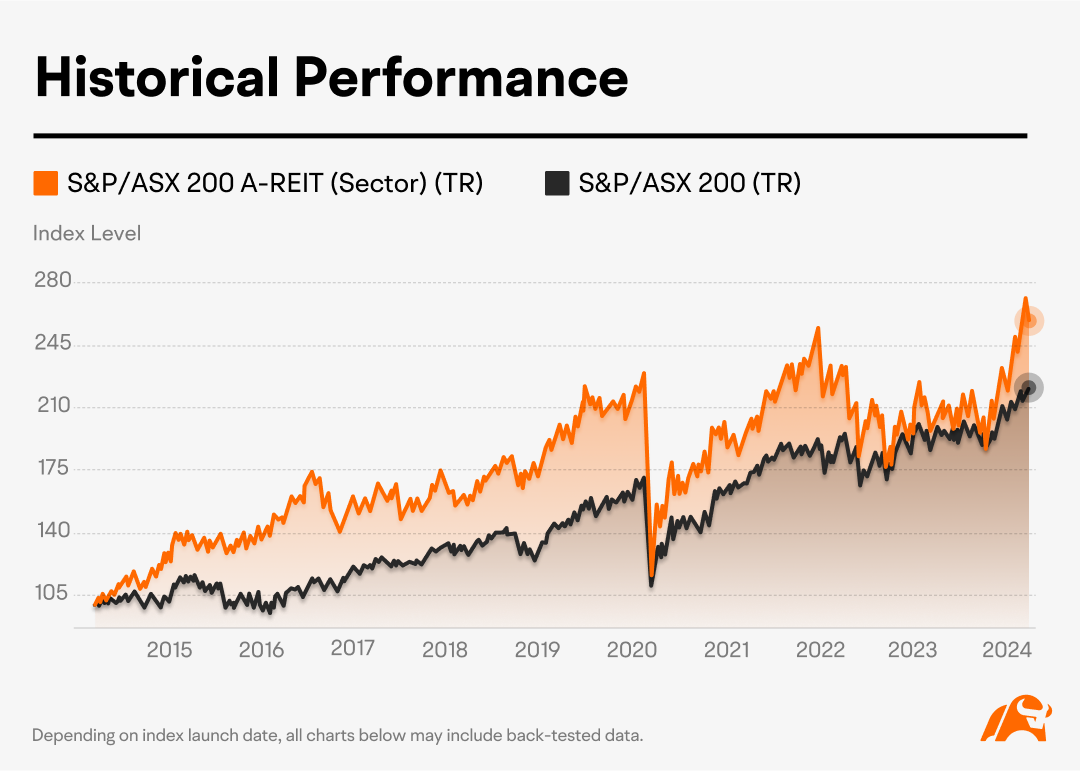
Investing in A-REITs carries risks. For example, real estate can be sensitive to macroeconomic factors and market cycles, impacting your returns when the market environment worsens. Rising interest rates can have a negative effect on A-REIT performance, both by increasing interest costs and by making fixed-income investments more attractive to income-oriented investors, potentially reducing overall demand.
Options
Options are contracts between two parties that give the taker (buyer) the right, but not the obligation, to buy or sell an underlying security at a predetermined price on or before a predetermined date. To acquire this right, the taker pays a premium to the writer (seller) of the contract.
There are two types of options: call options and put options.
A call option gives you the right, but not the obligation, to buy the underlying asset.
A put option gives you the right, but not the obligation, to sell the underlying asset.
Traders generally buy calls when they expect the price of the underlying to rise, and puts when they expect the price to fall.
Options cater to a diverse array of investors and traders, providing the flexibility to devise strategies tailored to any market outlook—whether you’re bullish, bearish, or neutral.
You can use options to get leveraged exposure to the sharemarket, lock in a potential buy or sell price, safeguard your shares against a decline, and generate additional income.
However, options are not suitable for all investors, and options trading strategies can be complex. Before trading options, you should carefully assess your experience, investment objectives, and ensure you fully understand options and their risks.
This presentation is for informational and educational use only and is not a recommendation or endorsement of any particular investment or investment strategy. Investment information provided in this content is general in nature, strictly for illustrative purposes, and may not be appropriate for all investors. Read more