Institutional Tracker: get insight into famous portfolios
Have you struggled with stock selection, often investing a lot of time without a great payoff? If you’re looking for somewhere to start, following top institutions and renowned figures in the financial world can be both time-efficient and effective if executed properly.
On the moomoo platform, an exclusive feature called ‘Institutional Tracker’ allows investors to easily monitor leading global institutions, letting you to know what they’re acquiring, selling or holding. This tool eliminates many of the hurdles associated with stock selection. Let’s delve into the details of how to leverage this feature to its full potential.
What is the Institutional Tracker?
The Institutional Tracker is a sophisticated tool that leverages SEC-mandated 13F filings, quarterly reports required from investment managers with at least $100 million in equity assets under management. This regulatory requirement serves as a window into the operations of these financial powerhouses.
In essence, the Institutional Tracker reveals U.S. equity holdings of leading financial institutions each quarter. It provides a snapshot of the ‘smart money’ movements, enabling you to potentially align your portfolio with some of the market’s most successful players.
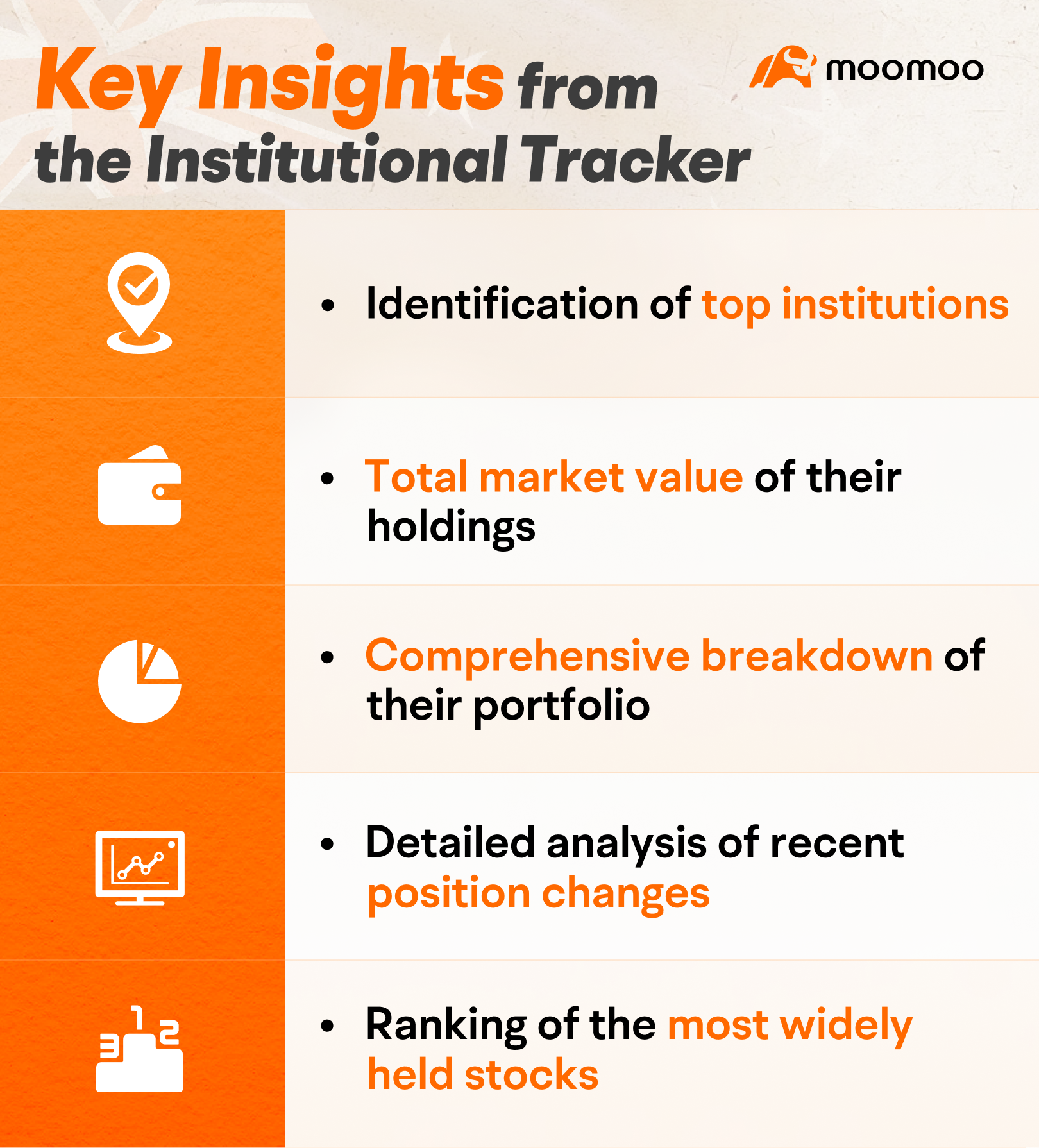
Here’s are several key insights from the Institutional Tracker:
How to use the Institutional Tracker
Investors can learn a lot by studying the investing portfolios of top investors, using the Institutional Tracker as a tool to discover their holdings. In the moomoo app, tap on ‘Markets’ > ‘US’, and scroll down near the bottom to access this feature.
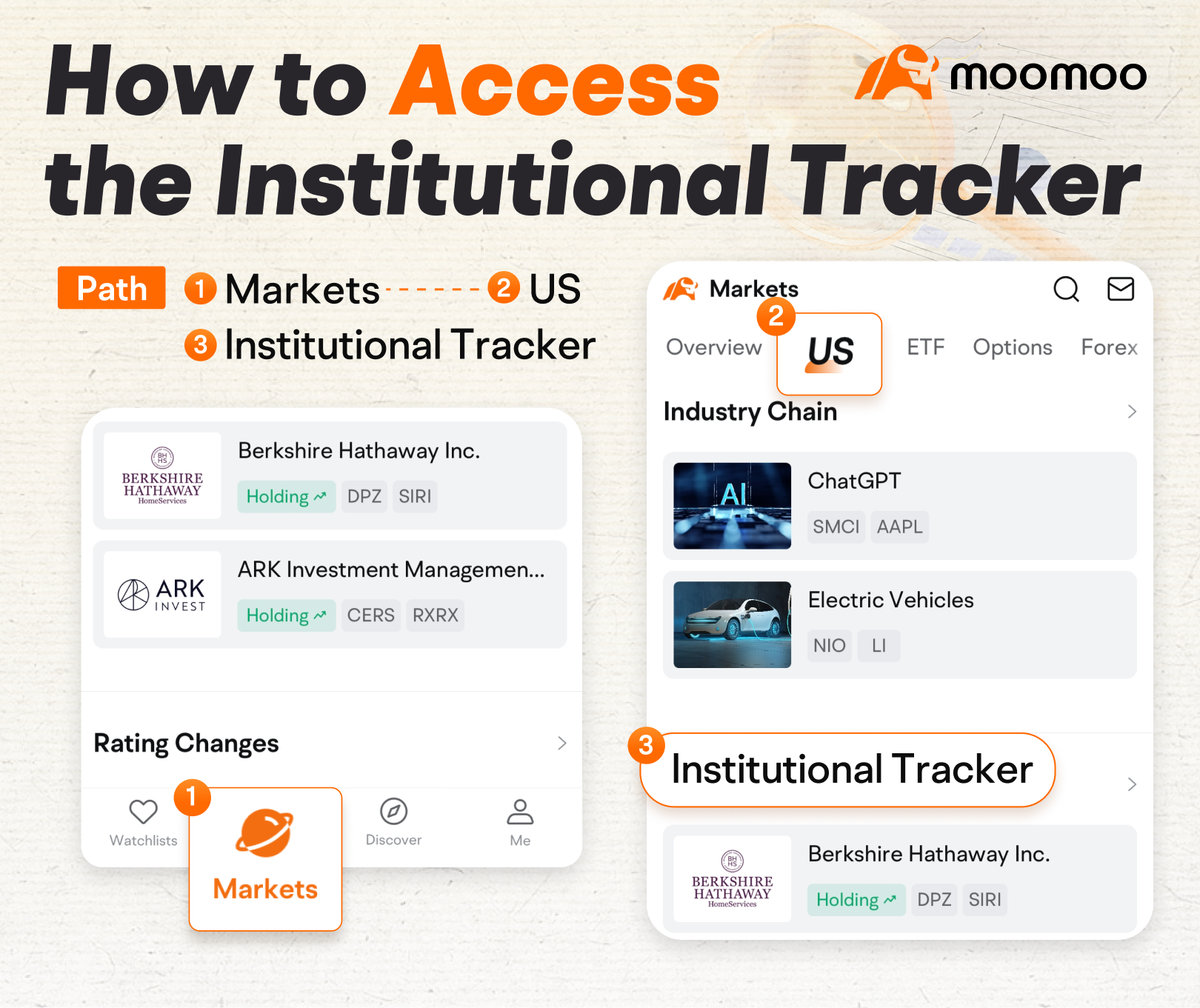
Here are some tips for using the Institutional Tracker:
● Find your favored institutions
Global financial giants like Vanguard and BlackRock have cultivated a diverse array of investments, encompassing both actively managed funds and passive index trackers. The sheer breadth of these funds’ holdings often obscures clear investment insights for the average investor.
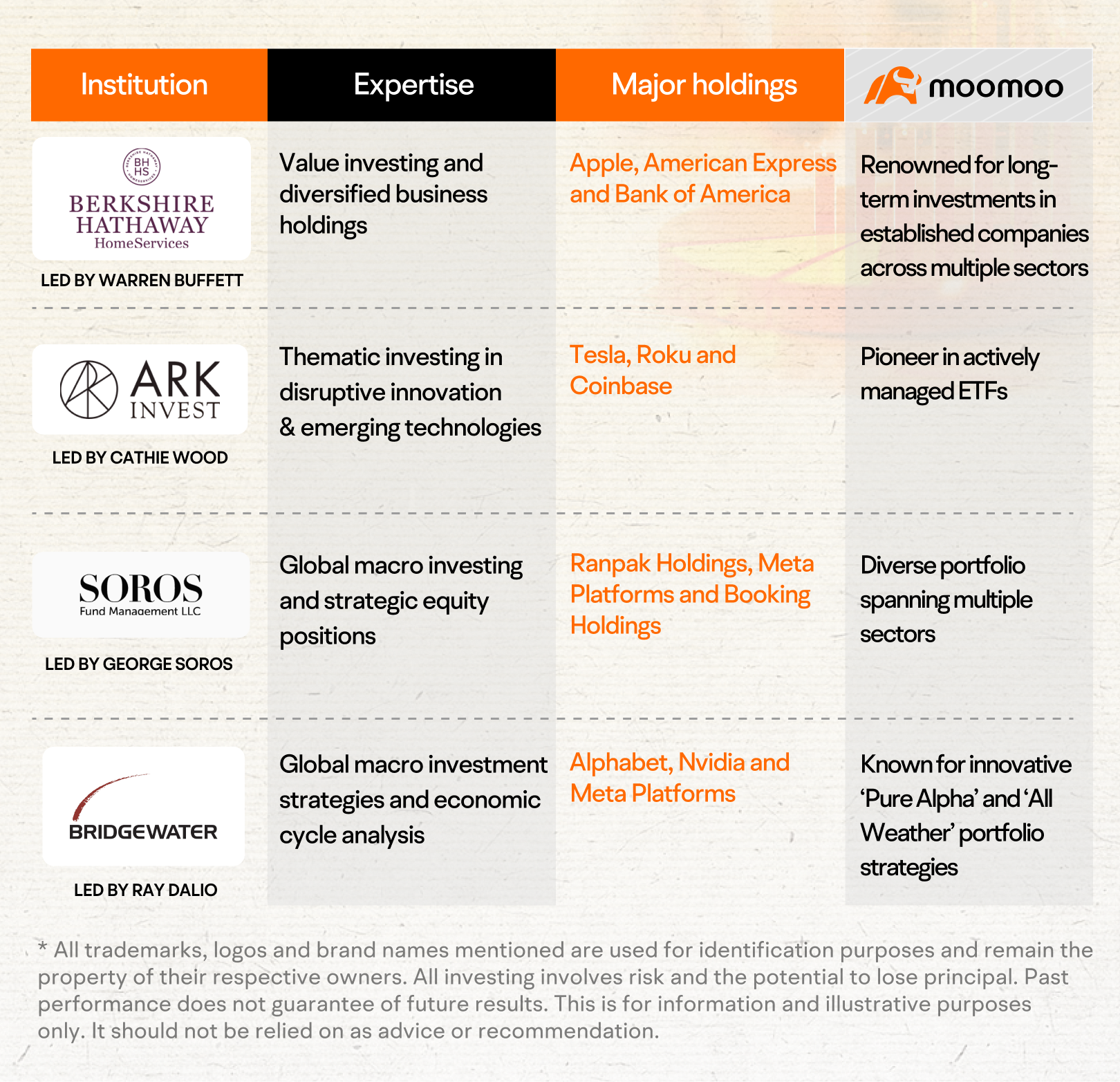
In contrast, specialised institutions with proven track records and distinct areas of expertise wield significant influence over global markets and investment strategies. Their unique investment philosophies offer valuable perspectives on stock selection and portfolio management.
To better understand this landscape, let’s examine several preeminent financial powerhouses and their core competencies:
● Analyse their investment positions
The ‘Trending Stocks’ list displays stocks with the broadest institutional ownership. These stocks are typically the top market cap companies in the U.S. sharemarket, attracting many active and passive investment funds, due to their historically robust long-term performance and returns.
To explore a specific institution’s portfolio, tap ‘Top Institutions’ and you can view or search for particular institutions. For seamless portfolio tracking, simply tap the ‘Follow’ button to add selected institutions to your personalised ‘My Following’ watchlist.
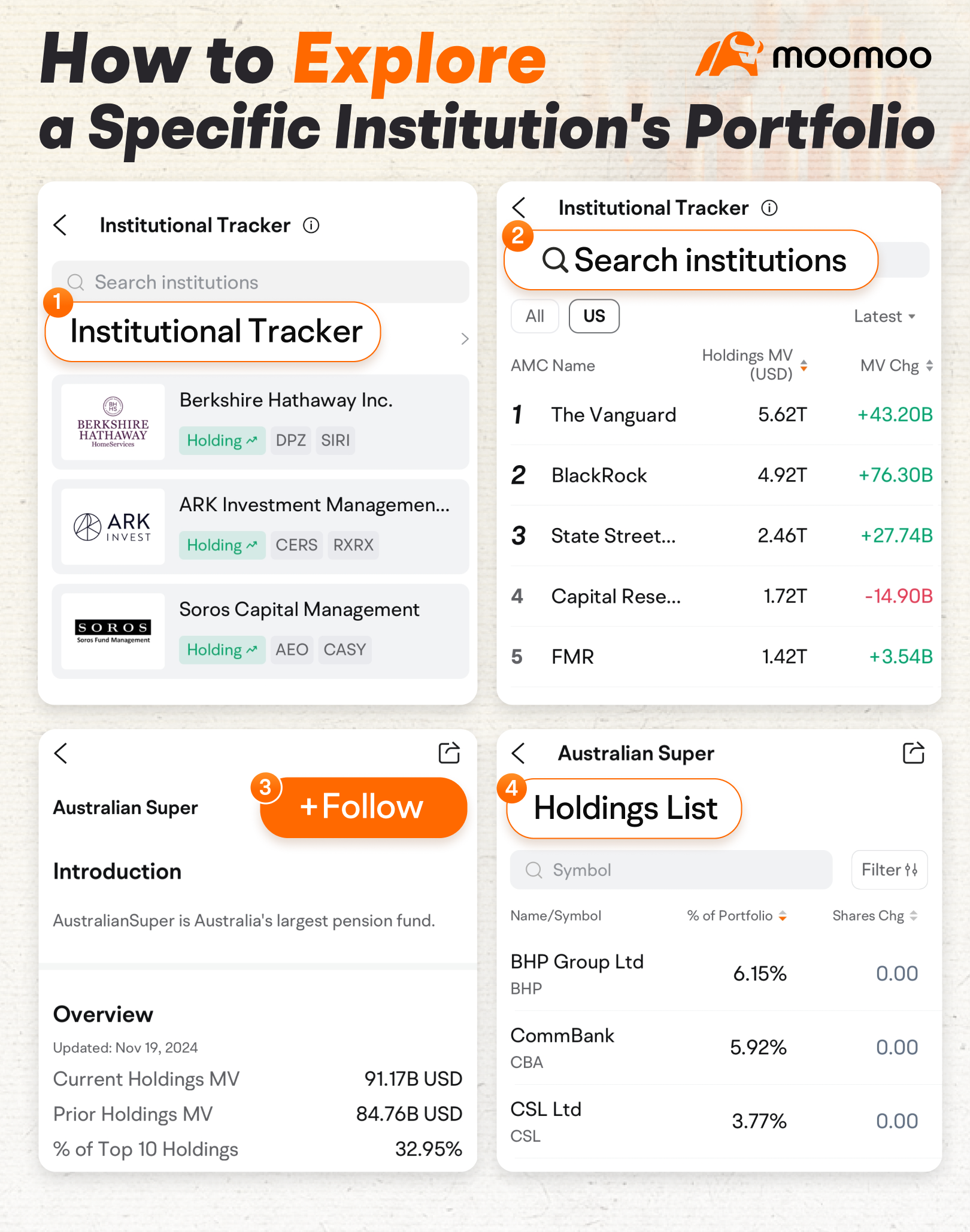
For instance, if you want to explore the portfolio of the Australian Superannuation Fund, simply input relevant search terms such as ‘Australian’. This query will reveal Australian Super, Australia’s largest super fund managing an impressive portfolio exceeding US$90 billion in total holdings.
Delving into its investment strategy, you’ll discover a balanced approach to asset allocation. The fund’s cornerstone investments are primarily anchored in blue-chip Australian corporations, showcasing a strong commitment to domestic economic growth. However, demonstrating global market acumen, the portfolio is strategically diversified to include titans among the world’s industry leaders such as Microsoft, Amazon, Alphabet and Apple.
● Examine what they’ve bought and sold
Understanding what top institutions’ positions is important, but examining their position changes is even more crucial. Let’s take Warren Buffett’s Berkshire Hathaway as an example. As at the end of the third quarter of 2024, Apple was Berkshire’s largest holding, with a stake valued at $67.8 billion. During the third quarter of 2024, however, Berkshire divested 100 million shares of its Apple stake.
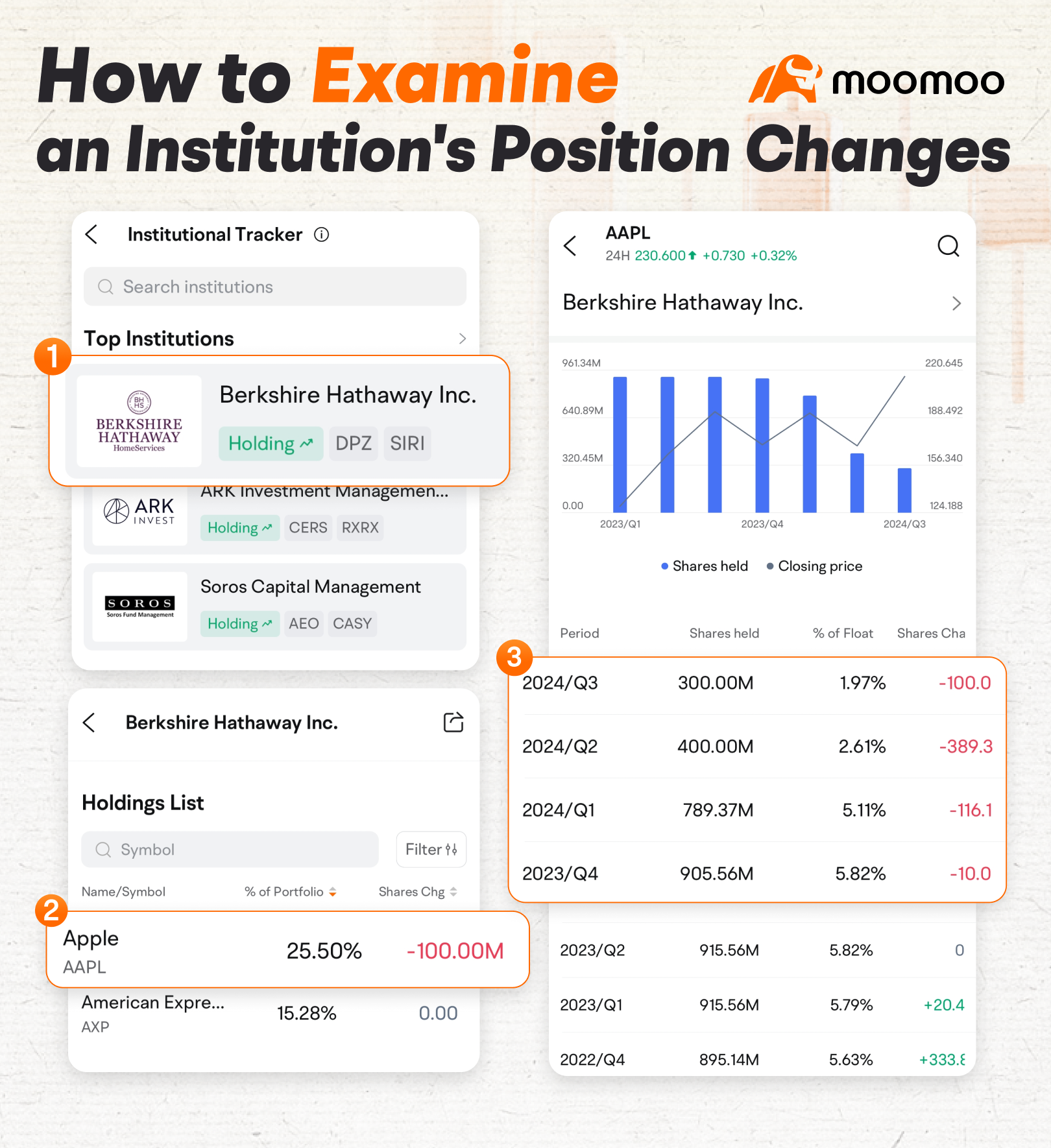
For a more granular analysis, tapping Apple on the Holdings List reveals a compelling trend: Berkshire’s largest equity holding has undergone a consistent reduction for four consecutive quarters. The cumulative effect is striking—a 67.2% decrease from its position at the end of the third quarter of 2023. This indicates that although Apple remains Berkshire’s largest holding, the ‘Oracle of Omaha’ may no longer be as firmly bullish on the company as he was in the past.
Historically, Berkshire’s Apple investment was so significant that it comprised nearly half of its entire equity portfolio. The motivations behind this sustained divestment in a stock Berkshire first acquired over eight years ago remain subject to speculation. Industry analysts and shareholders have posited various theories, including concerns over high valuations and a strategic move to mitigate portfolio concentration risk.
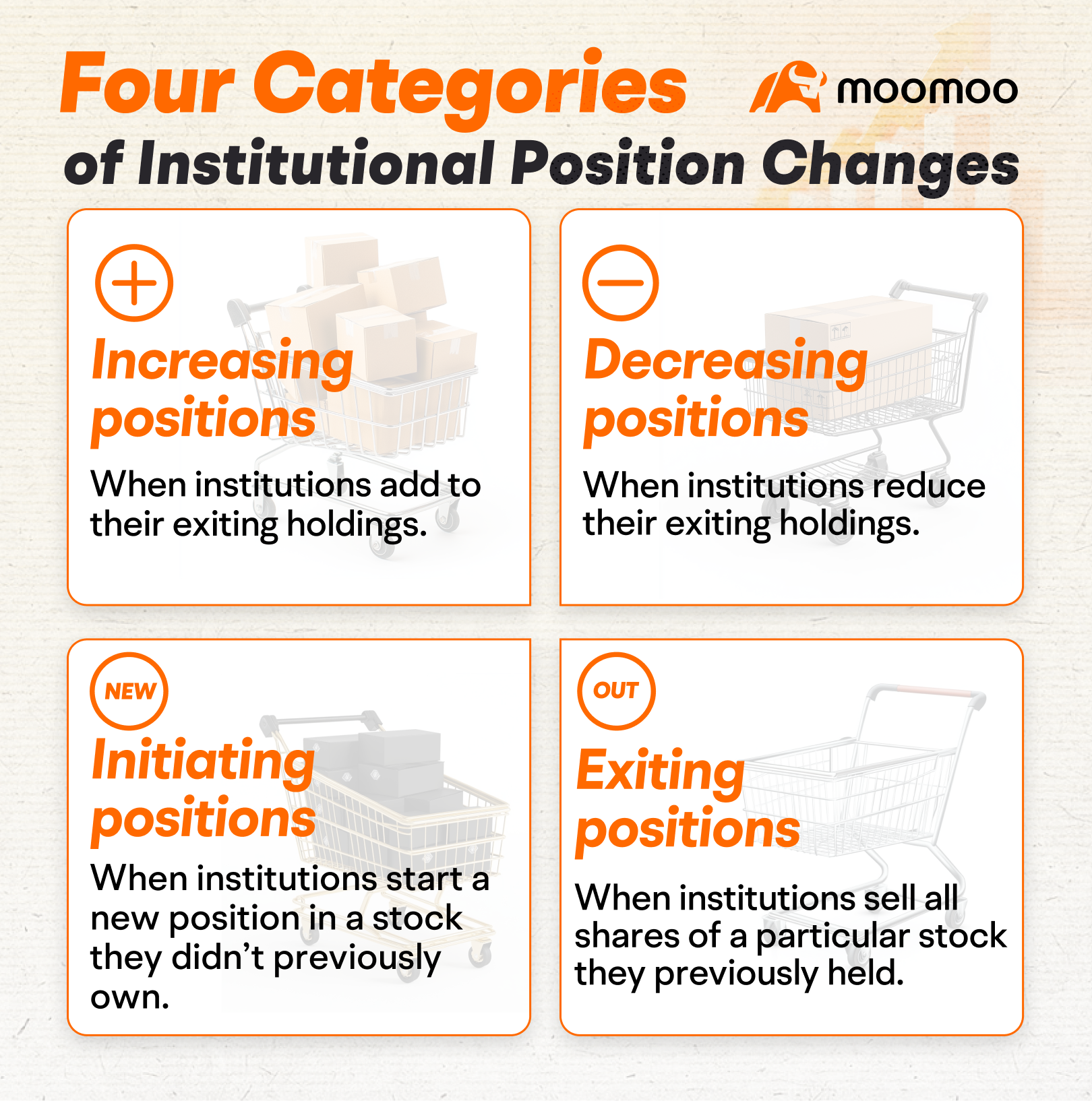
When analysing institutions’ positions, you can keep a close eye on changes in holdings, which can be categorised into four aspects: increasing, decreasing, initiating and liquidating positions.
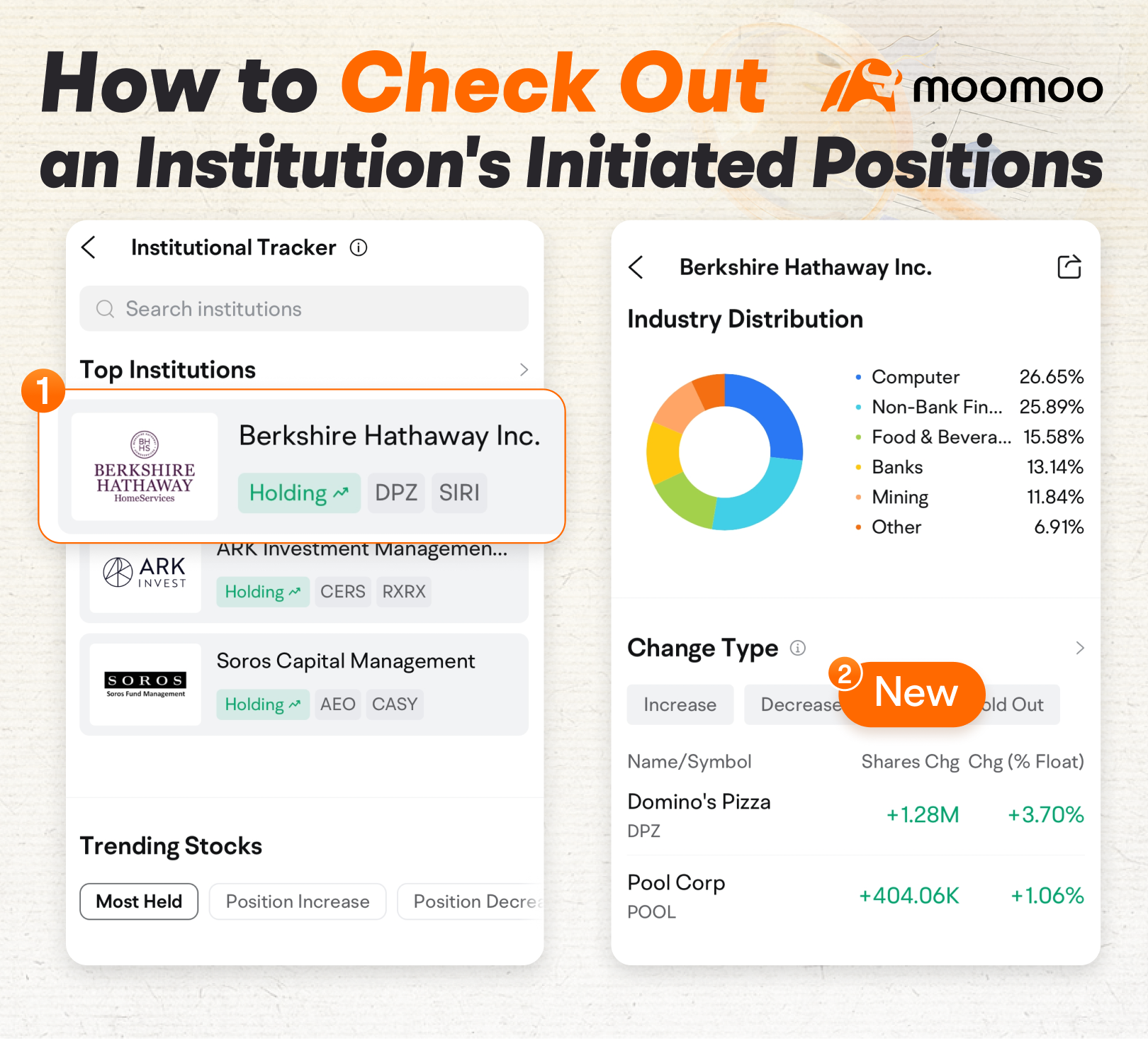
Let’s continue with Berkshire as our example. In the third quarter of 2024, Berkshire initiated positions in two stocks: nearly 1.3 million shares of Domino’s Pizza (worth roughly $550 million) and 404,000 shares of Pool Corp (worth $151 million). Although these new positions are relatively modest in scale and may not appear to be Buffett’s personal investment decisions, every move in his portfolio is meticulously scrutinised by market participants. These changes can significantly influence the short-term trajectories of the associated stocks.
● Focus on stocks with increased institutional positions
Generally, when institutions increase their holdings or initiate new positions in a stock, it signals a positive outlook on the company’s future prospects. A substantial quarterly purchase or consistent buying over several quarters often indicates an even stronger bullish sentiment.
In the short term, institutional buying is likely to trigger an upward move in stock prices. For instance, just after Berkshire discloses a new position, there’s a high probability of seeing a quick rise in the stock price. This phenomenon, known as the ‘Buffett Effect’, stems from investors’ interest in stocks that have caught the eye of this renowned investor, famous for his astute market insights.
However, the long-term performance of stocks with increased institutional positions depends on the company’s fundamentals. You can use institutions’ increased positions as a starting point for your stock selection process, warranting further analysis and ongoing tracking.
Additionally, investors can leverage news media to gain insights into institutional perspectives on these stocks. For example, Buffett often elaborates on his investment rationale for specific companies during Berkshire’s annual shareholder meetings or other public forums. By utilising such publicly available information, you can continually refine your understanding of the investment value of relevant stocks.
Key considerations when using the Institutional Tracker
While the Institutional Tracker provides investors with a window into the investment strategies of renowned global institutions, it’s not a simple matter of copying homework to become a top student. Before utilising this feature, you need to understand its limitations, primarily in two aspects:
● Delayed portfolio data
As previously mentioned, the portfolio information revealed through the Institutional Tracker is based on 13F filings required by the SEC. However, these filings have an inherent lag. Institutions often choose to submit their 13F forms at the last moment allowed by the SEC, which is 45 days after the end of each quarter. This means that some of the data might be outdated. Stocks appearing in an institution’s portfolio list may have been partially sold or even completely liquidated since the filing.
● Limited to long positions
13F filings only disclose long positions and do not include short positions. Consequently, for institutions that skillfully use long positions to execute hedging or even strategic short-selling, their long position data may have limited relevance or could even be misleading. This necessitates a deeper understanding of an institution’s investment style and strategies. Investors should focus on institutions that favor value investing and long-term investment strategies rather than blindly following their moves.
The bottom line
The Institutional Tracker opens a window for investors to understand the investing philosophy of ‘smart money’. This powerful tool offers several benefits, including:
● Insights into portfolio changes of top institutions
● Ability to detect market trends
● Identification of potentially undervalued stocks
● Opportunities to learn sophisticated investment strategies
● Early warning signals for potential market shifts
● Inspiration for trading ideas and portfolio management
However, despite its accessibility and value, the Institutional Tracker has limitations and shouldn’t be the sole guide for investment decisions. It’s one of many analysis tools available. Savvy investors should integrate this feature with other analytical methods, market research and personal financial goals to develop a comprehensive investment strategy.
This presentation is for informational and educational use only and is not a recommendation or endorsement of any particular investment or investment strategy. Investment information provided in this content is general in nature, strictly for illustrative purposes, and may not be appropriate for all investors. Read more